J Adv Periodontol Implant Dent. 18(1):48-54.
doi: 10.34172/japid.026.3353
Original Article
Effects of periodontitis on micro and macro vascular complications of diabetes: A systematic review
Farhan Musaie Data curation, Investigation, Project administration, Supervision, Validation, Writing – review & editing, 1# 
Setareh Garousi Data curation, Investigation, 2#
Mehregan Shahrokhi Data curation, Investigation, 3#
Mahsa Babareshani Data curation, Investigation, 4
Danial Zamani Data curation, Investigation, 3
Zahra Ashrafi Data curation, Investigation, 3
Ala Shadbin Data curation, Investigation, 5
Ali Rezvanimehr Writing – original draft, 6
Zahra Sanei Writing – original draft, 7
Mehran Mottahedi Writing – original draft, 2
Nima Rahimipetrudi Writing – original draft, 8
Nozhan Azimi Writing – original draft, 9
Niloofar Deravi Writing – original draft, 10, *
Fatemeh Arabpour Conceptualization, Methodology, Project administration, Supervision, Validation, Writing – original draft, Writing – review & editing, 11
Hamed Taheri Conceptualization, Methodology, Project administration, Supervision, Validation, Writing – original draft, Writing – review & editing, 12, *
Author information:
1School of Dentistry, Tehran Islamic Azad University of Medical Sciences, Tehran, Iran
2Faculty of Medicine, Mashhad University of Medical Sciences, Mashhad, Iran
3School of Medicine, Shiraz University of Medical Sciences, Shiraz, Iran
4School of Allied Medical Sciences, Tehran University of Medical Sciences, Tehran, Iran
5School of Medicine, Shahid Beheshti University of Medical Sciences, Tehran, Iran
6Network of Immunity in Infection, Malignancy and Autoimmunity (NIIMA), Universal Scientific Education and Research Network (USERN), Tehran, Iran
7Faculty of Medicine, Mazandaran University of Medical Sciences, Sari, Iran
8Cardiovascular Research Center, Shahid Mohammadi Hospital, Hormozgan University of Medical Sciences, Bandar Abbas, Iran
9Dentofacial Deformities Research Center, Research Institute for Dental Sciences, Shahid Beheshti University of Medical Sciences, Tehran, Iran
10Student Research Committee, School of Medicine, Shahid Beheshti University of Medical Sciences, Tehran, Iran
11Department of Orthodontics, School of Dentistry, Shahid Sadoughi University of Medical Sciences, Yazd, Iran
12Dental School, Kazan Federal University, Tatarstan, Russia
Abstract
Background.
Periodontitis (PD) is a chronic inflammatory disease of the oral cavity. PD can adversely affect glycemic control and cause macro- and micro-vascular diseases in diabetic patients. This article aims to systematically review the association between periodontitis and micro- and macro-vascular complications of diabetes.
Methods.
This review was conducted under the Preferred Reporting Items for Systematic Reviews and Meta-analysis (PRISMA). A thorough search of the Scopus and PubMed databases was performed up to 2022. English articles were included.
Results.
In this study, seven studies with 29,679 participants investigated the relationship between periodontitis and micro- and macro-vascular complications. There were two cohort studies, six cross-sectional studies, and one case‒control study. Follow-up durations ranged from 6 months to 11.64 years. The reports were published between 2002 and 2022. There was a relationship between periodontitis and the microvascular complications of diabetes in four studies. One study found no significant association between periodontitis and the microvascular complications of diabetes. The correlation between coronary heart disease (CHD) and periodontal disease was confirmed by one study. Furthermore, another study found that periodontitis increased the risk of cerebral and myocardial infarctions.
Conclusion.
The present study demonstrated that diabetes mellitus (DM) patients with periodontitis are at an increased risk of macro- and micro-vascular complications, particularly myocardial and cerebral infarctions.
Keywords: Diabetes mellitus, Macrovascular complications, Microvascular complications, Periodontitis, Risk factors
Copyright and License Information
© 2026 The Author(s).
This is an open access article distributed under the terms of the Creative Commons Attribution License (
http://creativecommons.org/licenses/by/4.0/), which permits unrestricted use, distribution, and reproduction in any medium, provided the original work is properly cited.
Funding Statement
This research received no specific grant from funding agencies in the public, commercial, or not-for-profit sectors.
Introduction
Periodontitis (PD) is a chronic inflammatory disease of the oral cavity, caused by bacteria. Similar to many other diseases, PD can cause symptoms, including swelling, bleeding, and changes in the gingival color. Additionally, it has some effects on teeth. For instance, it causes bone damage, resulting in tooth loss. Accumulation of pus between the teeth and a bad taste are two other signs. On the other hand, this infection can cause adverse systemic effects due to the penetration of bacteria and their products into the bloodstream.1,2
These products stimulate the host’s immune system, which leads to the release of inflammatory mediators into the bloodstream. These mediators can cause systemic disorders, especially in people with diabetes mellitus (DM). For example, PD adversely affects glycemic control, which has a significant relation with DM.3,4
DM is caused by long-term hyperglycemia and can lead to macro- and micro-vascular diseases. Diabetic nephropathy, neuropathy, and retinopathy are some examples of microvascular complications. Coronary artery disease, stroke, and peripheral arterial disease are classified as macro-vascular diseases.5
It should be noted that PD is the most common chronic infection in diabetic patients.6 Therefore, this article aims to systematically review the association between periodontitis and micro- and macro-vascular complications of DM.
Methods
Protocol and registration
PRISMA (Preferred Reporting Items for Systematic Reviews and Meta-Analyses) was followed for the present systematic review.7Figure 1 shows the PRISMA checklist for reporting the results of the systematic review. The study protocol was registered in Open Science Framework (https://osf.io/hncg9).
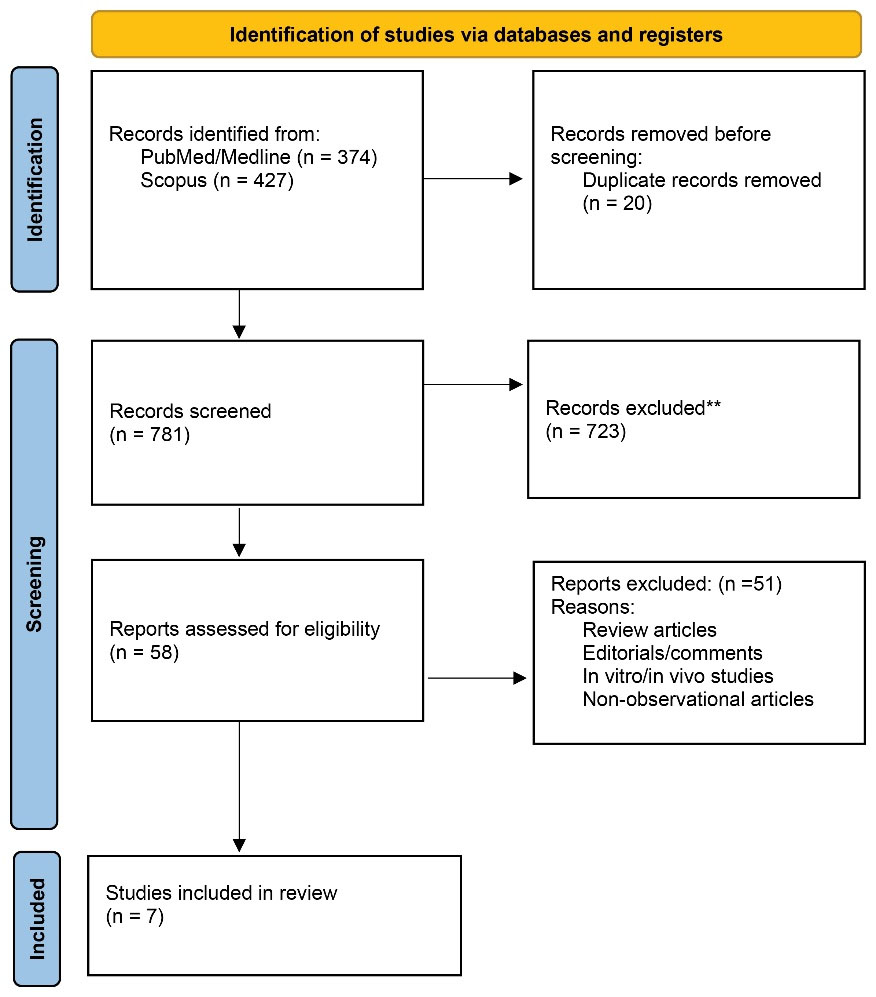
Figure 1.
PRISMA flow diagram of the study
.
PRISMA flow diagram of the study
Search strategy
A systematic search was conducted across the PubMed and Scopus databases (September 12, 2022) to identify relevant studies.
The search strategy included a combination of keywords and Medical Subject Headings (MeSH) terms related to “microvascular” OR “macrovascular”, OR “diabetic ulcer”, AND “periodontitis.” The entire search strategy used for all databases is summarized in Supplementary file 1. We only considered English studies (Table S1).
Inclusion criteria
Observational and clinical studies, including cross-sectional, case‒control, cohort studies, and clinical trials investigating the impact of periodontitis on micro- and macro-vascular complications of DM in humans, including diabetic retinopathy, nephropathy, neuropathy, cardiovascular disease, and death.
Exclusion criteria
Systematic reviews, commentaries, editorials, in vitro studies, in vivo studies, and animal studies were excluded. Moreover, additional relevant studies were identified by hand-searching the references of articles included in the primary search.
Study selection
Six reviewers (AR, ZA, NR, DZ, MM, and SG) independently screened all the titles and abstracts after removing duplicate records. Discrepancies were resolved by consensus or using a third reviewer (AS). When studies met the inclusion criteria, the full texts were obtained and independently assessed by two authors (FM and ZS). When there was disagreement between reviewers, a third author (MB) was consulted. Finally, 7 studies were included, and studies that did not meet the inclusion criteria were excluded. No restrictions for age, gender, or race were applied.
The screening process is shown by the 2020 PRISMA checklist in Figure 1.
Quality assessment
The quality and risk of bias of all studies that met the inclusion criteria were independently evaluated by two reviewers using the Joanna Briggs Institute (JBI) Critical Appraisal tools (https://jbi.global/critical-appraisal-tools).
Evaluation of methods or reporting for all types of studies was carried out using this tool. For qualitative studies, the JBI tool includes 10 questions, each with four possible answers: Yes, No, Uncertain, and Not Applicable. A study was considered low risk of bias if 70% of its questions were answered “yes.” Those who responded “yes” to 50‒69% of the questions had a moderate risk of bias, while those who responded “yes” to < 50% of the questions had a high risk of bias. Studies with “good” or “fair” quality were included, and “low-quality” studies were excluded. Disagreements were resolved by consensus.
Data extraction
Five reviewers independently extracted data from articles using a pre-prepared standardized template. Authors extracted 1) authors, 2) country, 3) type of study, 4) follow-up duration, 5) population, 6) sex, 7) adjustments, 8) outcomes, and 9) quality score.
If there was disagreement between reviewers, a third author was consulted.
Results
This study included 7 studies with 29,679 participants that investigated the relationship between periodontitis and micro- and macro-vascular complications in diabetic patients. These studies were conducted in Korea,8,9 Denmark,10 Thailand,11 Mexico,12 Japan,13 and India.5 Regarding study design, there were two cohort studies,8,9 four cross-sectional studies,5,11-13 and one case‒control10 study. The follow-up duration for cohort studies ranged from 6 months10 to 11.64 years.9 All of these reports were published between 2002 and 2022.
Individuals with diabetes may suffer from micro-vascular complications such as nephropathy, neuropathy, and retinopathy. According to Park et al,8 periodontitis is an independent risk factor for diabetes-related micro-vascular diseases. Veena et al’s5 study revealed a significant correlation between DM and diabetic retinopathy (DR), DM duration and severity of PD, DR severity and severity of PD, PD severity and levels of higher glycated hemoglobin (HbA1c) and serum creatinine, and also a positive correlation between DR severity and levels of HbA1c and serum creatinine. Menchaca-Díaz et al12 indicated that periodontitis and edentulism are associated with the occurrence of neuropathy in diabetic patients. According to Nitta et al,13 a higher prevalence of diabetic micro-vascular complications is associated with more severe periodontitis in type 2 diabetes. In contrast, in the Rawdaree et al’s11 study population, DM micro-vascular complications were not significantly associated with periodontitis (Table 1).11
Table 1.
A summary of the studies on the effects of periodontitis on micro- and macro-vascular complications of diabetes
|
Author
|
Country
|
Type of study
|
Follow-up duration
|
Population
|
Sex (female %)
|
Adjustments
|
Outcomes
|
Quality score
|
| Song et al9 |
South Korea |
Cohort |
11.64 years |
17,009 patients with DM who had
participated in a nationwide health-screening program, including oral health examination,
during 2002–2003 in South Korea. |
35.25% |
Age, gender, household income, BMI, smoking status, alcohol consumption, physical activity, presence of hypertension, levels of fasting glucose, total cholesterol |
1-Periodontitis was an independent risk factor for the development of cerebral or myocardial infarction (adjusted HR: 1.17, 95% CI: 1.02–1.34; P = 0.030)
2- In the subgroup analysis for individual outcomes, periodontitis was an independent risk factor for cerebral infarction (adjusted HR: 1.20, 95% CI: 1.01–1.42; P = 0.040). In contrast, the presence of periodontitis was not significantly associated with an increased risk of myocardial infarction (adjusted HR: 1.11, 95% CI: 0.88–1.42; P = 0.384). |
10/11 |
| López et al10 |
Denmark |
Case-control |
6 months |
61 patients with myocardial infarction and age between 30-50 years old |
27.8 % |
Smoking, diabetes, systolic blood pressure |
1. The mean attachment level was positively associated with case status
(OR: 3.17; 95% CI = [1.31; 7.65]), as was the mean pocket depth (OR: 8.64, 95% CI = [1.22; 61.20])
2. The number of teeth present was not statistically significantly associated with case status (ORΩ0.93; 95% CI = [0.83; 1.04]). |
8 /10 |
| Rawdaree et al11 |
Thailand |
Cross-sectional |
- |
- |
60% |
- |
1. The mean ( ± SD) chemical attachment levels among patients with and without complications were 3.6 ( ± 1.1) mm and 3.3 ( ± 1.0) mm, respectively (P > 0.05).
2. The mean ( ± SD) probing depth among those with and without complications were 2.5 ( ± 0.6) and 2.5 ( ± 0.6), respectively.(P = 0.75)
3. On logistic regression analysis, periodontitis was not significantly associated with microvascular |
5/8 |
| Menchaca-Díaz et al12 |
Mexico |
Cross-sectional study |
- |
436
patients with type 2 diabetes |
68.3 % |
Age, duration of diabetes, glycaemic control, smoking, and alcohol use |
Neuropathy associated with severe periodontitis was observed (odds ratio [OR]: 2.7; 95%: confidence interval [IC]: 1.5-4.8).
Neuropathy was associated with edentulism (OR: 4.4; 95% CI: 2.0-9.4).
The multivariate analysis with logistic regression maintained the association between severe periodontitis and edentulism with neuropathy as significant (OR adjusted: 1.7; 95% CI: 1.1-2.6) |
8 / 8 |
| Nitta et al13 |
Japan |
Cross-sectional |
- |
620
patients with type 2 diabetes |
38.8% |
Diabetes duration, sex, age, and HbA1c level |
There was a significant association between the prevalence of periodontitis and glycaemic control (P < 0.01).
The prevalence of periodontitis was associated with high HbA1c ( ≥ 8.0% [64 mmol/mol] and a longer duration of diabetes ( ≥ 15 years).
The prevalence of periodontitis was not significantly associated with the number of microvascular complications.
The incidence of severe periodontitis was significantly higher in patients with good, fair, and poor glycaemic control than in those
with excellent glycaemic control (P < 0.05, P < 0.01, and P < 0.01, respectively).
The severity of periodontitis was significantly associated with the number of microvascular complications (OR: 1.3; 95% Cl, 1.1–1.6), and HbA1c ≥ 8.0% (64 mmol/mol) (OR: 1.6; 95% Cl, 1.1–2.3).
The incidence of severe periodontitis was significantly higher among patients with microvascular complications than among those without microvascular complications (P < 0.05) |
8/8 |
| Park et al8 |
Korea |
Cohort |
1 year |
11,353 diabetes participants without prior microvascular complications |
31% |
Cox regression model analysis was adjusted for age, sex, alcohol consumption, smoking habits, body mass index, frequency of exercise, income level, comorbidities, and laboratory findings |
periodontitis was significantly associated with the occurrence of microvascular complications. periodontitis was an independent risk factor for diabetes-related microvascular complications (adjusted HR:1.13; 95% CI:1.04–1.23; P = 0.004 |
7.9 |
| Veena et al5 |
India |
Cross-sectional study |
_ |
Diabetes in 200 adult diabetics aged 30 to 65 years with varying severity of DR |
28% |
Did not any specific adjustment mention |
6.8 |
1. duration of DM and the severity of DR and PD (P < 0.001).
2. The severity of PD was directly correlated with the severity of DR (P < 0.001).
3.association between the levels of HbA1c and serum creatinine and severity of DR and PD (P < 0.001).
4. Association between the mean PI and gingival index scores and severity of DR (P < 0.001). |
BMI: Body Mass Index; CVD: Cardiovascular Disease; TC: Total Cholesterol; BP: Blood Pressure; CBG: Casual Blood Glucose; PSR: Periodontal Screening Record; DM: individuals with diabetes without neuropathy; DMN: individuals with cardiovascular autonomic diabetic neuropathy; HbA1c: hemoglobin A1C; PI: plaque index; GI: gingival index; HR: hazard ratio.
Macro-vascular diseases are another group of complications that diabetic people may have. A positive association between coronary heart disease (CHD) and periodontal disease was corroborated by López et al.10 In addition, according to Song et al,9 myocardial and cerebral infarction are both independently associated with periodontitis. In these studies, adjustments were as follows: smoking,8-10,12 diabetes,10 systolic blood pressure age,8,9,12,13 duration of diabetes,12,13 glycemic control,12 alcohol use,8,9,12 sex,8,9,13 HbA1c level frequency of exercise,8 income level,8,9 body mass index,8,9 laboratory findings,8 comorbidity, physical activity,9 presence of hypertension, levels of fasting glucose,9 and total cholesterol.9
Discussion
Periodontitis, a highly prevalent disease, is associated with immune activation in response to the accumulation and maturation of oral bacteria on teeth, leading to the destruction of the supporting tissues of teeth. Periodontitis and DM, as two complex chronic diseases, are linked by a bidirectional relationship, with a two to three times higher risk of periodontitis in diabetic patients and poorer glycemic control in patients with periodontitis compared to healthy individuals. Several studies in the past 2‒3 decades demonstrated HbA1c and worse diabetic complications as side effects of periodontitis, which can be alleviated following periodontal therapy.8,14,15
The present systematic review included 29,679 patients across 7 studies and examined the effects of periodontitis on micro- and macro-vascular complications of DM. Overall, the present study showed positive interactions between periodontitis and vascular factors of DM. The numerous studies that made up this systematic review showed that individuals with PD had a higher chance of developing diabetic complications than those with DM, who did not have the condition.
DM can lead to long-term micro-vascular complications that affect small blood vessels. Retinopathy, nephropathy, and neuropathy are examples of these. The mean plaque index (PI) and gingival index (GI) scores were highest among patients with proliferative DR. PD severity and DM duration were positively correlated.5 According to research by Banthia et al,16 individuals with DR had worse dental hygiene than those with DM, but no DR.16 The result of periodontal destruction is noticeably worse in individuals with DR, and DM is related to PD.17 Menchaca-Díaz et al12 observed that neuropathy is associated with severe periodontitis.12 The multivariate analysis with logistic regression maintained that the association between severe periodontitis and edentulism with neuropathy was significant. Veena et al5 found a statistically significant association between the duration of DM and DR and periodontitis severity.5 Additionally, Nitta et al13 discovered that patients suffering from microvascular complications had considerably fewer teeth than patients without such complications.13
Several mechanisms may explain the increased correlation between cardiovascular risk and indicators of poor oral hygiene. First, there are numerous risk factors for both periodontitis and cardiovascular conditions, including metabolic syndrome, smoking, alcohol use, obesity, hypertension, dyslipidemia, aging, and low socioeconomic level.18-21 Moreover, periodontitis can cause hyperglycemia and poor glucose regulation through enhanced local and systemic inflammatory reactions, raising the risk of cardiovascular disease.3,22 With a 17% elevated risk, periodontitis was a standalone risk factor for cerebral or myocardial infarction. Periodontitis was a 20% independent risk factor for cerebral infarction in the subgroup analysis for individual outcomes. However, the risk of myocardial infarction was not significantly enhanced when periodontitis was present.9
Patients with poor dental hygiene have a variety of risk factors that can all lead to the development of cardiovascular problems. Alternatively, periodontitis and carious teeth may contribute to increased long-term cardiovascular risk.23 The onset and progression of atherosclerosis can both be directly influenced by oral infection and inflammation. Bacteremia from the oral cavity can penetrate the walls of blood vessels and enter the bloodstream.24 Additionally, periodontal bacteria’s virulence factors and oral inflammation can exert several detrimental effects on the cardiovascular system, such as oxidative stress, a rise in systemic inflammation, endothelial dysfunction, an increase in thrombotic factors, and immune cell reactions to cardiovascular tissues.24,25 According to Song et al,9 patients with DM had an elevated chance of developing myocardial or cerebral infarction due to both periodontitis and having more carious teeth. A greater number of carious teeth ( > 5) was substantially linked to an increased risk of cerebral infarction by 80%, but not to an increased risk of myocardial infarction, which increased by 41%, according to the study. Myocardial or cerebral infarction incidence was adversely correlated with frequent tooth brushing ( ≥ 2 times/day). Brushing teeth more than twice per day significantly reduced the risk of myocardial or cerebral infarction compared with brushing just once per day.9
Poor glycemic control has been shown to increase the prevalence and severity of periodontitis in patients with type 2 diabetes due to chronic hyperglycemia-induced disorders with many synergistic adverse effects, including higher growth factor levels,26 stimulated inflammation,27 elevated oxidative stress,28 production of advanced end-products of glycation,29 neutrophil dysfunction,30 and protein kinase C activation.31 There was a statistically significant difference between the groups and a positive association between serum creatinine and HbA1c levels and the intensity of PD. With an average HbA1c of 9.058% and an average serum creatinine of 1.498 mg/dL, a statistically significant association was found between the intensity of DR, serum creatinine levels, and HbA1c.5 A total of 620 diabetic patients participated in the Nitta et al’s13 (2017) study. A total of 620 research participants had 293 patients with poor glycemic control (47.2%), 152 with fair glycemic control (24.5%), 135 with good glycemic control (21.8%), and 40 with excellent glycemic control (6.5%). Patients with good, medium, and poor glycemic control had a significantly higher incidence of severe periodontitis than individuals with excellent glycemic control.13
The number of carious teeth, clinical assessments of periodontal health, and the oral health state were all part of the diagnostic parameters for periodontitis. Accurate reporting of diagnostic standards and pertinent medical data is essential for further studies. Due to the diverse ethnic origins of the individuals included in this analysis, the findings are likely to apply to people worldwide. The reported relationships between periodontitis and DM complications need to be confirmed in high-quality trials with clinical endpoints, despite challenges posed by follow-up periods, the number of patients involved, and drop-outs. To better understand the relationship between periodontitis and diabetic complications, further studies must provide uniform reporting of diagnostic criteria and pertinent medical data and include well-designed randomized clinical trials.
Conclusion
In DM patients, periodontitis was associated with the incidence of macro- and micro-vascular problems, especially myocardial and cerebral infarction, according to our study. It is well-established that various systemic illnesses and periodontitis are closely linked. PD is linked to cardiovascular problems and death, and enhances sensitivity to atherosclerosis or thrombosis. According to this, frequent toothbrushing and early detection of periodontal conditions may be useful interventions to successfully lower cardiovascular problems, which are a substantial cause of morbidity and mortality in the diabetic group. We advise careful, well-designed intervention trials to look into how periodontal therapy affects the progression of diabetic problems to potentially decrease micro- and macro-vascular consequences in patients with DM.
Competing Interests
The authors declare that they have no known competing financial interests or personal relationships that could have influenced the work reported in this paper.
Data Availability
All data generated or analyzed during this study are included in this published article and accompanying supplementary materials.
Ethical Approval
Not applicable.
Supplementary Files
Supplementary file 1 contains Table S1.
(pdf)
Acknowledgements
The authors would like to thank the researchers whose work was included in this study.
References
- Byon MJ, Kim SY, Kim JS, Kim HN, Kim JB. Association of periodontitis with atherosclerotic cardiovascular diseases: a nationwide population-based retrospective matched cohort study. Int J Environ Res Public Health 2020; 17(19):7261. doi: 10.3390/ijerph17197261 [Crossref] [ Google Scholar]
- Gurav A, Jadhav V. Periodontitis and risk of diabetes mellitus. J Diabetes 2011; 3(1):21-8. doi: 10.1111/j.1753-0407.2010.00098.x [Crossref] [ Google Scholar]
- Nguyen AT, Akhter R, Garde S, Scott C, Twigg SM, Colagiuri S. The association of periodontal disease with the complications of diabetes mellitus. A systematic review. Diabetes Res Clin Pract 2020; 165:108244. doi: 10.1016/j.diabres.2020.108244 [Crossref] [ Google Scholar]
- Dhir S, Kumar V. Are cardiovascular risk parameters and glycemic levels associated with periodontitis in type 2 diabetes patients? A clinical study. Indian Heart J 2018; 70(3):430-2. doi: 10.1016/j.ihj.2017.10.002 [Crossref] [ Google Scholar]
- Veena HR, Natesh S, Patil SR. Association between diabetic retinopathy and chronic periodontitis-a cross-sectional study. Med Sci (Basel) 2018; 6(4):104. doi: 10.3390/medsci6040104 [Crossref] [ Google Scholar]
- Khumaedi AI, Purnamasari D, Wijaya IP, Soeroso Y. The relationship of diabetes, periodontitis and cardiovascular disease. Diabetes Metab Syndr 2019; 13(2):1675-8. doi: 10.1016/j.dsx.2019.03.023 [Crossref] [ Google Scholar]
- Moher D, Liberati A, Tetzlaff J, Altman DG. Preferred reporting items for systematic reviews and meta-analyses: the PRISMA statement. Ann Intern Med 2009; 151(4):264-9. doi: 10.7326/0003-4819-151-4-200908180-00135 [Crossref] [ Google Scholar]
- Park MS, Jeon J, Song TJ, Kim J. Association of periodontitis with microvascular complications of diabetes mellitus: a nationwide cohort study. J Diabetes Complications 2022; 36(2):108107. doi: 10.1016/j.jdiacomp.2021.108107 [Crossref] [ Google Scholar]
- Song TJ, Jeon J, Kim J. Cardiovascular risks of periodontitis and oral hygiene indicators in patients with diabetes mellitus. Diabetes Metab 2021; 47(6):101252. doi: 10.1016/j.diabet.2021.101252 [Crossref] [ Google Scholar]
- López R, Oyarzún M, Naranjo C, Cumsille F, Ortiz M, Baelum V. Coronary heart disease and periodontitis--a case control study in Chilean adults. J Clin Periodontol 2002; 29(5):468-73. doi: 10.1034/j.1600-051x.2002.290513.x [Crossref] [ Google Scholar]
- Rawdaree P, Tantipoj C, Rodanant P. Association between periodontitis and microvascular complications among patients with type 2 diabetes mellitus. Southeast Asian J Trop Med Public Health 2021; 52(1):112-23. [ Google Scholar]
- Menchaca-Díaz R, Bogarín-López B, Zamudio-Gómez MA, Anzaldo-Campos MC. [Severe periodontitis, edentulism and neuropathy in patients with type 2 diabetes mellitus]. Gac Med Mex 2012;148(1):34-41. [Spanish].
- Nitta H, Katagiri S, Nagasawa T, Izumi Y, Ishikawa I, Izumiyama H. The number of microvascular complications is associated with an increased risk for severity of periodontitis in type 2 diabetes patients: results of a multicenter hospital-based cross-sectional study. J Diabetes Investig 2017; 8(5):677-86. doi: 10.1111/jdi.12633 [Crossref] [ Google Scholar]
- García-Hernández EL. Association of periodontal disease and diabetic retinopathy. Mex J Med Res ICSA 2023; 11(21):19-24. doi: 10.29057/mjmr.v11i21.8947 [Crossref] [ Google Scholar]
- Sugi N, Eguchi E, Tsuboi A, Hatanaka K, Takashiba S, Kira Y. Periodontal diseases assessed by average bone resorption are associated with microvascular complications in patients with type 2 diabetes. Diabetol Int 2023; 14(1):32-9. doi: 10.1007/s13340-022-00591-0 [Crossref] [ Google Scholar]
- Banthia R, Raje S, Banthia P, Saral SK, Singh P, Gupta S. Evaluation of the association between periodontal disease and diabetic retinopathy. Gen Dent 2014; 62(6):e28-32. [ Google Scholar]
- Shlossman M, Knowler WC, Pettitt DJ, Genco RJ. Type 2 diabetes mellitus and periodontal disease. J Am Dent Assoc 1990; 121(4):532-6. doi: 10.14219/jada.archive.1990.0211 [Crossref] [ Google Scholar]
- Fagundes NC, Almeida A, Vilhena KF, Magno MB, Maia LC, Lima RR. Periodontitis as a risk factor for stroke: a systematic review and meta-analysis. Vasc Health Risk Manag 2019; 15:519-32. doi: 10.2147/vhrm.S204097 [Crossref] [ Google Scholar]
- Oliveira LS, Lira-Junior R, Figueredo CM, Gomes MB, Fischer RG. Self-reported periodontitis and complications in type 1 diabetes patients: a Brazilian nationwide survey. Braz Dent J 2016; 27(5):599-603. doi: 10.1590/0103-6440201601054 [Crossref] [ Google Scholar]
- Thorstensson H, Kuylenstierna J, Hugoson A. Medical status and complications in relation to periodontal disease experience in insulin-dependent diabetics. J Clin Periodontol 1996; 23(3 Pt 1):194-202. doi: 10.1111/j.1600-051x.1996.tb02076.x [Crossref] [ Google Scholar]
- Song TJ, Kim JW, Kim J. Oral health and changes in lipid profile: a nationwide cohort study. J Clin Periodontol 2020; 47(12):1437-45. doi: 10.1111/jcpe.13373 [Crossref] [ Google Scholar]
- D’Aiuto F, Gkranias N, Bhowruth D, Khan T, Orlandi M, Suvan J. Systemic effects of periodontitis treatment in patients with type 2 diabetes: a 12 month, single-centre, investigator-masked, randomised trial. Lancet Diabetes Endocrinol 2018; 6(12):954-65. doi: 10.1016/s2213-8587(18)30038-x [Crossref] [ Google Scholar]
- Joshipura K, Zevallos JC, Ritchie CS. Strength of evidence relating periodontal disease and atherosclerotic disease. Compend Contin Educ Dent 2009; 30(7):430-9. [ Google Scholar]
- Aarabi G, Heydecke G, Seedorf U. Roles of oral infections in the pathomechanism of atherosclerosis. Int J Mol Sci 2018; 19(7):1978. doi: 10.3390/ijms19071978 [Crossref] [ Google Scholar]
- Sanz M, Marco Del Castillo A, Jepsen S, Gonzalez-Juanatey JR, D’Aiuto F, Bouchard P. Periodontitis and cardiovascular diseases: consensus report. J Clin Periodontol 2020; 47(3):268-88. doi: 10.1111/jcpe.13189 [Crossref] [ Google Scholar]
- Unlü F, Güneri PG, Hekimgil M, Yeşilbek B, Boyacioğlu H. Expression of vascular endothelial growth factor in human periodontal tissues: comparison of healthy and diabetic patients. J Periodontol 2003; 74(2):181-7. doi: 10.1902/jop.2003.74.2.181 [Crossref] [ Google Scholar]
- Mealey BL, Rose LF. Diabetes mellitus and inflammatory periodontal diseases. Curr Opin Endocrinol Diabetes Obes 2008; 15(2):135-41. doi: 10.1097/MED.0b013e3282f824b7 [Crossref] [ Google Scholar]
- Monea A, Mezei T, Popsor S, Monea M. Oxidative stress: a link between diabetes mellitus and periodontal disease. Int J Endocrinol 2014; 2014:917631. doi: 10.1155/2014/917631 [Crossref] [ Google Scholar]
- Takeda M, Ojima M, Yoshioka H, Inaba H, Kogo M, Shizukuishi S. Relationship of serum advanced glycation end products with deterioration of periodontitis in type 2 diabetes patients. J Periodontol 2006; 77(1):15-20. doi: 10.1902/jop.2006.77.1.15 [Crossref] [ Google Scholar]
- Manouchehr-Pour M, Spagnuolo PJ, Rodman HM, Bissada NF. Comparison of neutrophil chemotactic response in diabetic patients with mild and severe periodontal disease. J Periodontol 1981; 52(8):410-5. doi: 10.1902/jop.1981.52.8.410 [Crossref] [ Google Scholar]
- Karima M, Kantarci A, Ohira T, Hasturk H, Jones VL, Nam BH. Enhanced superoxide release and elevated protein kinase C activity in neutrophils from diabetic patients: association with periodontitis. J Leukoc Biol 2005; 78(4):862-70. doi: 10.1189/jlb.1004583 [Crossref] [ Google Scholar]